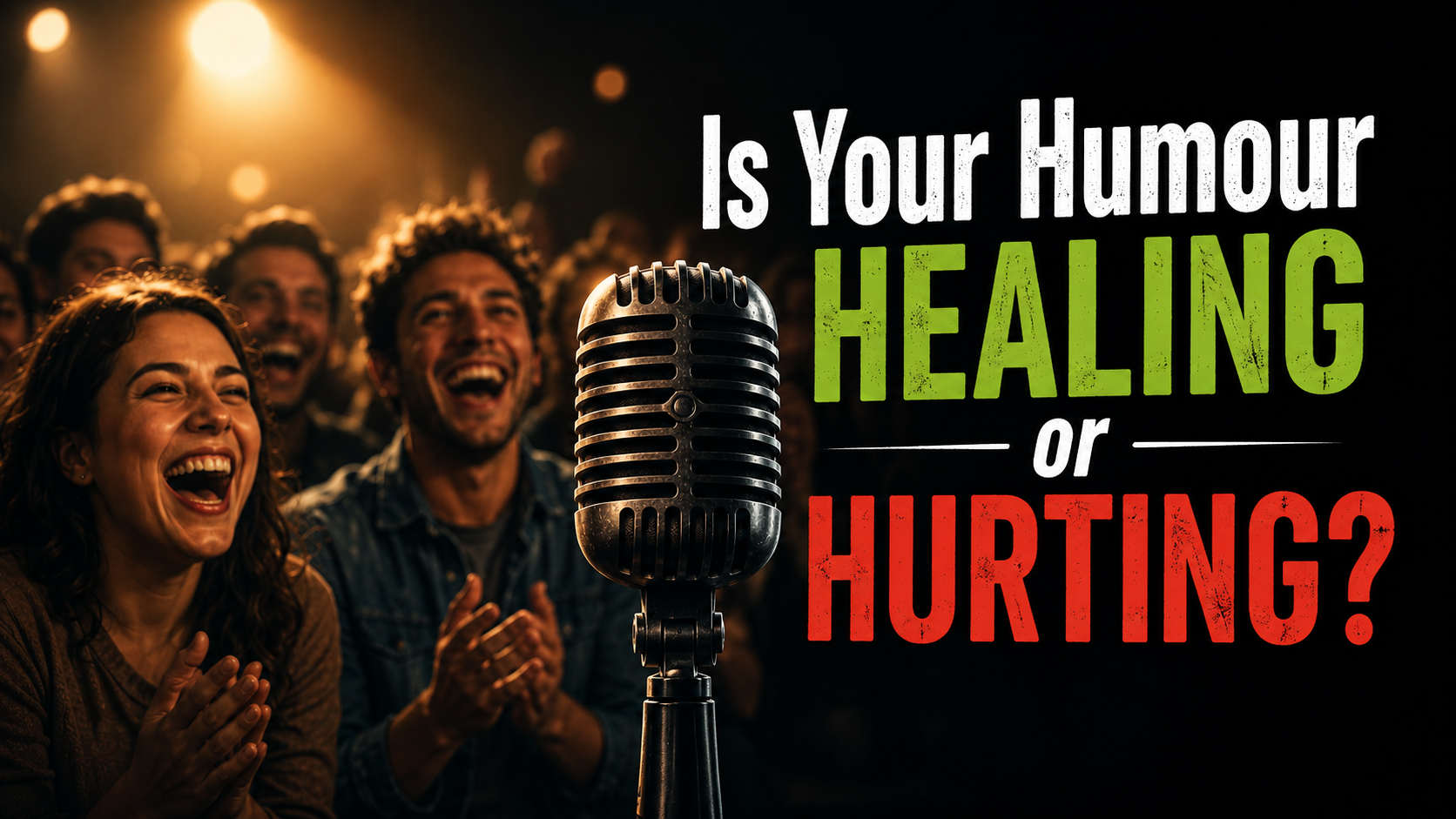
Is Your Humour Healing or Hurting?
- |
- 01 Jul 2026
- |
- Mental Health

This International Joke Day, It’s Time to Ask: What Are We Really Laughing At?
“It’s just a joke.”
We’ve all heard this phrase.
Whether it’s a meme in the family WhatsApp group, a stand-up comedy special, a viral reel, or a friend’s sarcastic comment, humour has become one of the most powerful ways we communicate.
And that’s not necessarily a bad thing.
In fact, on International Joke Day (July 1), we celebrate something deeply human, the ability to laugh. Laughter reduces stress, strengthens relationships, eases difficult conversations, and reminds us that even in hard times, joy is possible.
But in recent months, India has witnessed a series of comedy-related controversies that have forced us to ask an uncomfortable question:
When does humour stop healing and start hurting?
Research consistently shows that healthy humour has profound psychological benefits.
It can:
- Reduce stress hormones like cortisol.
- Increase endorphins, our natural “feel-good” chemicals.
- Improve resilience during difficult times.
- Strengthen relationships.
- Help people cope with grief, anxiety, and everyday stress.
- Create emotional safety through shared laughter.Think about the friend who made you laugh during your toughest days. Or the comedian whose observations made you feel less alone. That’s the magic of humour. The best jokes don’t just make us laugh. They make us feel connected.

But Not Every Joke Is Healthy
Just because something makes people laugh doesn’t automatically make it harmless.
Humour can also normalize prejudice, humiliation, bullying, objectification, and violence. Sometimes, laughter hides discomfort. Sometimes, it hides pain. And sometimes, it tells us more about society than the joke itself.
The Comedy Controversies That Started a Conversation
Over the past few months, several incidents from Indian comedy shows have gone viral, not because they were funny, but because they raised larger questions about ethics, consent, dignity, and responsibility.
The ₹370 Biryani Incident
One of the most talked-about moments came during a live crowd-work comedy show.
An audience member joked that because he had spent ₹370 on a chicken biryani during a date, he was entitled to physical intimacy in return, as though he deserved to “recover” the money he had spent.
The audience laughed. The clip went viral.
Soon, millions of people across the country were debating the same question:
Is this really just a joke?
Many criticized the exchange for reducing a woman’s consent to the price of a meal and reinforcing the harmful belief that spending money creates entitlement over another person’s body.
Others argued that comedy often brings up uncomfortable beliefs of the society which otherwise are too threatening to discover or that audiences shouldn’t take every joke literally. Regardless of which side people supported, one thing became clear – the incident wasn’t just about comedy anymore. It had become a conversation about respect, consent, and the messages hidden underneath our laughter.
The Cadaver Joke Controversy
Soon after, another clip from comedian Pranit More’s show sparked fresh debate.
During an audience interaction, Sejal Pawar, an undergraduate MBBS student at Mumbai’s KEM Hospital, joked about comparing the genital sizes of male cadavers during anatomy dissection classes.
The audience laughed. Social media didn’t.
Doctors, medical students, ethicists, and members of the public questioned whether donated human bodies given for medical education should ever become material for public entertainment.
The discussion shifted beyond comedy. It became about medical ethics, dignity, professionalism, and public trust.
Some defended the context of live comedy and cautioned against judging someone solely through a short viral clip.
Others argued that certain forms of humour can unintentionally erode trust in professions built on compassion and respect.
Again, the bigger question wasn’t simply whether people laughed.
It was what the laughter represented.
Every Laugh Is Also a Social Signal
When we laugh, we’re not just reacting. We’re communicating. We tell others –
“This is acceptable.”
“This is normal.”
“This deserves applause.”
Comedy doesn’t exist in isolation.
It reflects culture.
And culture, in turn, is shaped by what people celebrate.
If jokes repeatedly mock women, bodies, people with disabilities, mental illness, marginalized communities, or survivors of trauma, they slowly influence what society begins to tolerate. Not overnight. But gradually.
Psychology Explains Why We Laugh at Harmful Things
Have you ever laughed at a joke and immediately wondered,
“Why did I laugh?”
Psychologists say there are many reasons.
Sometimes we laugh because everyone else is laughing. Sometimes we laugh because we’re uncomfortable. Sometimes clever timing overrides careful thinking. And sometimes, repeated exposure makes us emotionally numb. This is known as desensitization.
The more frequently we hear harmful ideas presented as humour, the less emotionally disturbing they begin to feel. That’s why humour is powerful. It doesn’t just reflect culture. It quietly shapes it.
Four Types of Humour
According to psychologist Rod Martin, humour can be categorised into 4 types –
- Affiliative Humour
The humour that brings people together.
Funny stories, shared experiences, light-hearted observations. Everyone laughs together.
- Self-Enhancing Humour
Finding humour during life’s challenges. Laughing without denying pain. This type of humour builds resilience.
- Aggressive Humour
Sarcasm.
Ridicule.
Mockery.
Humiliation disguised as entertainment. Someone becomes the punchline.
- Self-Defeating Humour
Constantly making yourself the joke just to gain acceptance. It may look funny. But sometimes it hides insecurity or emotional pain.
The first two styles generally strengthen emotional well-being. The last two deserve greater awareness.
Freedom of Expression Matters
Comedy has always challenged authority. It questions politics. Exposes hypocrisy. Starts conversations that others avoid. That role is important.
But freedom of expression doesn’t prevent us from asking difficult questions. Freedom gives us the right to speak. It also gives audiences the right to reflect, disagree, and discuss the impact of what is being said.
The goal isn’t to make comedy “safe.” The goal is to ask –
Can humour be bold without being dehumanizing?
Can it challenge power instead of targeting vulnerability?
Can it make us think without making someone else’s pain the price of entertainment?

Before You Laugh, Ask Yourself…
The next time you hear a joke, share a meme, or forward a funny video, pause for just a moment.
Ask yourself:
- Am I laughing with someone or at someone?
- Does this joke bring people together or leave someone feeling smaller?
- If I belonged to the group being joked about, would it still feel funny?
- Does this humour create connection or normalize disrespect?
Sometimes, the difference is everything.
The Kind of Humour the World Needs
This International Joke Day, laugh freely. Share stories. Enjoy good comedy. Life is already heavy enough. But let’s also celebrate humor that doesn’t depend on humiliation.
Humour that comforts instead of wounds.
Humour that questions power without stripping away someone’s dignity.
Humour that reminds us of our shared humanity.
The best jokes don’t leave someone carrying invisible hurt after everyone else has stopped laughing. They leave everyone feeling a little lighter and perhaps that’s the true purpose of humour, not simply to entertain us, but to help us heal.









Comments 0
No comments yet.
Be the first to share your thoughts on this post!