Modern Loneliness: More Connected Than Ever, Yet More Alone Than Ever Before
- |
- 04 Jun 2026
- |
- Connected minds

We live in the most connected era in human history.
We can reach anyone within seconds. A video call can connect continents. Social media allows us to know what someone ate, wore, or felt today, instantly. Our phones are always in our hands. The internet never sleeps. Notifications never stop.
And yet, somewhere in the middle of all this connection, humanity is quietly becoming lonelier. This is the paradox of modern life. We are digitally connected, but emotionally disconnected like never before.
The Gizmo Effect
Modern technology promised connection and, in many ways, it delivered exactly that. But it also created what many psychologists and thinkers describe as the “Gizmo Effect” – a strange emotional contradiction where gadgets connect us virtually while distancing us emotionally.
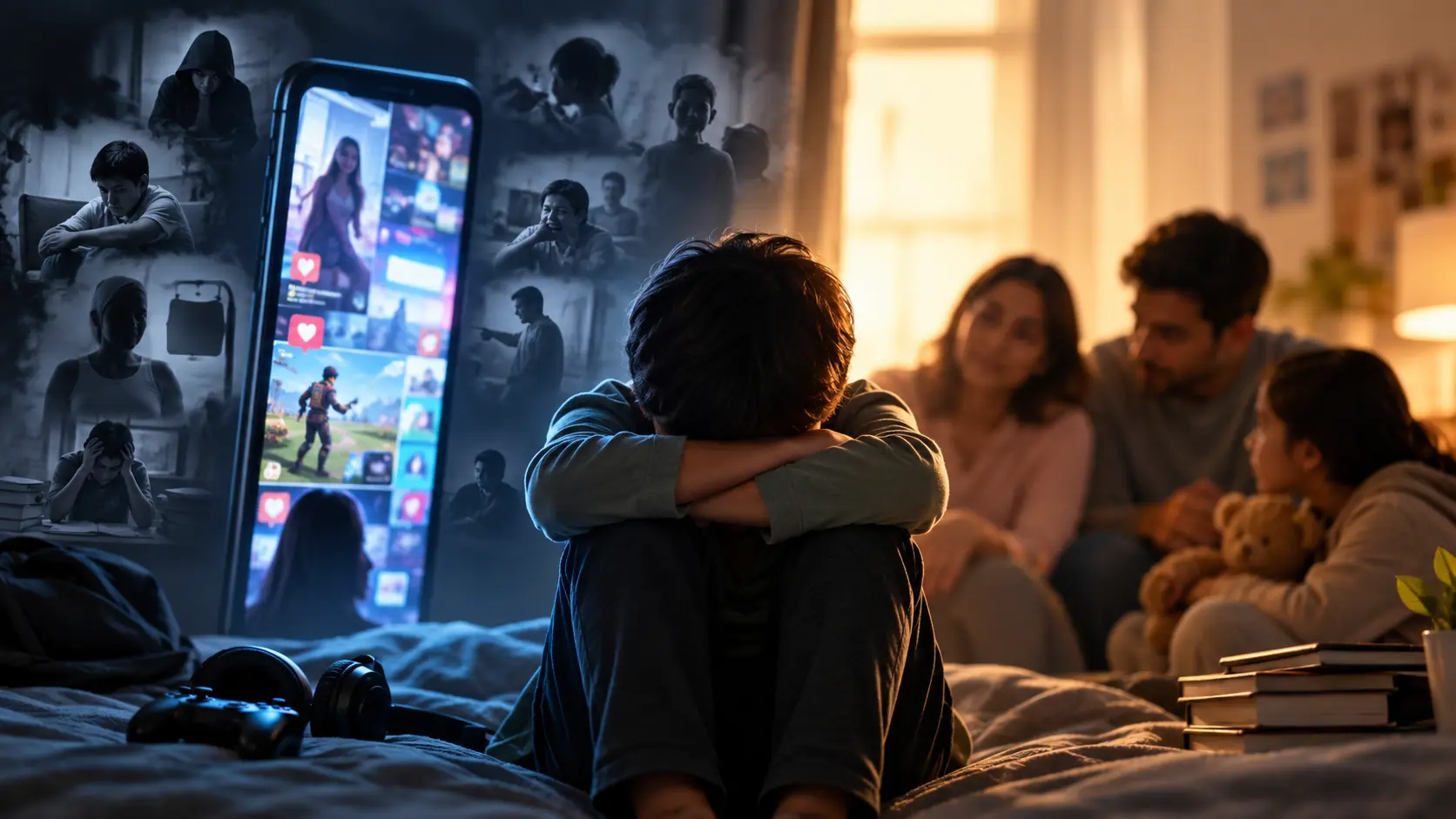
Today, people spend hours scrolling through endless content. We consume hundreds of stories, reels, memes, and updates every day. We know what strangers are doing in another country, but often do not know what the person sitting beside us is feeling. The more we connect to screens, the more disconnected we become from real human presence.
Hundreds of Contacts, Yet No One to Call
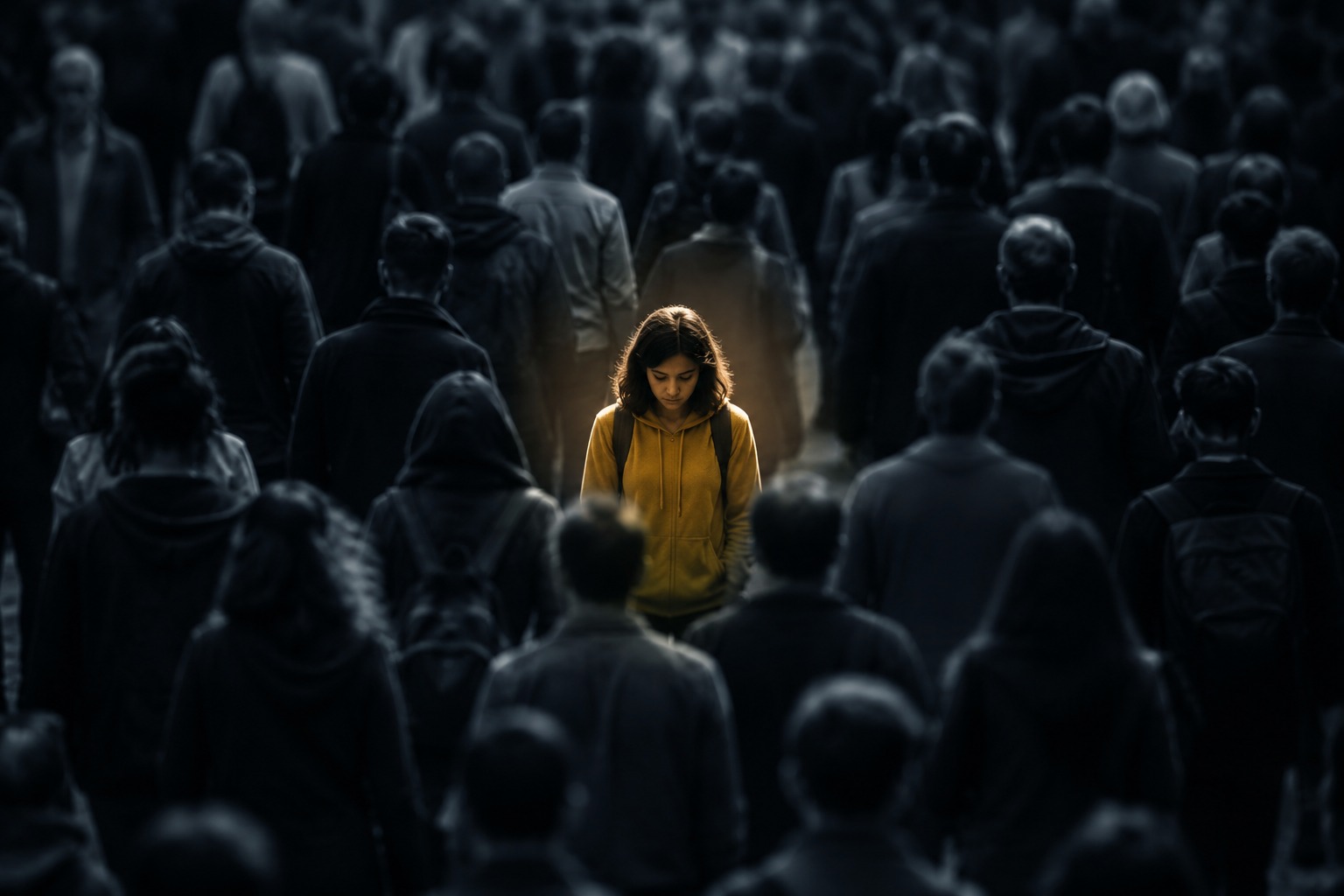
Most people today have thousands of followers, hundreds of contacts, and dozens of WhatsApp groups. Our phones are full of conversations. Yet when life truly falls apart, many people silently realize something painful – “There is actually no one I can truly talk to.”
No one who will sit beside us without judgment.
No one who will listen without distraction.
No one who is emotionally available.
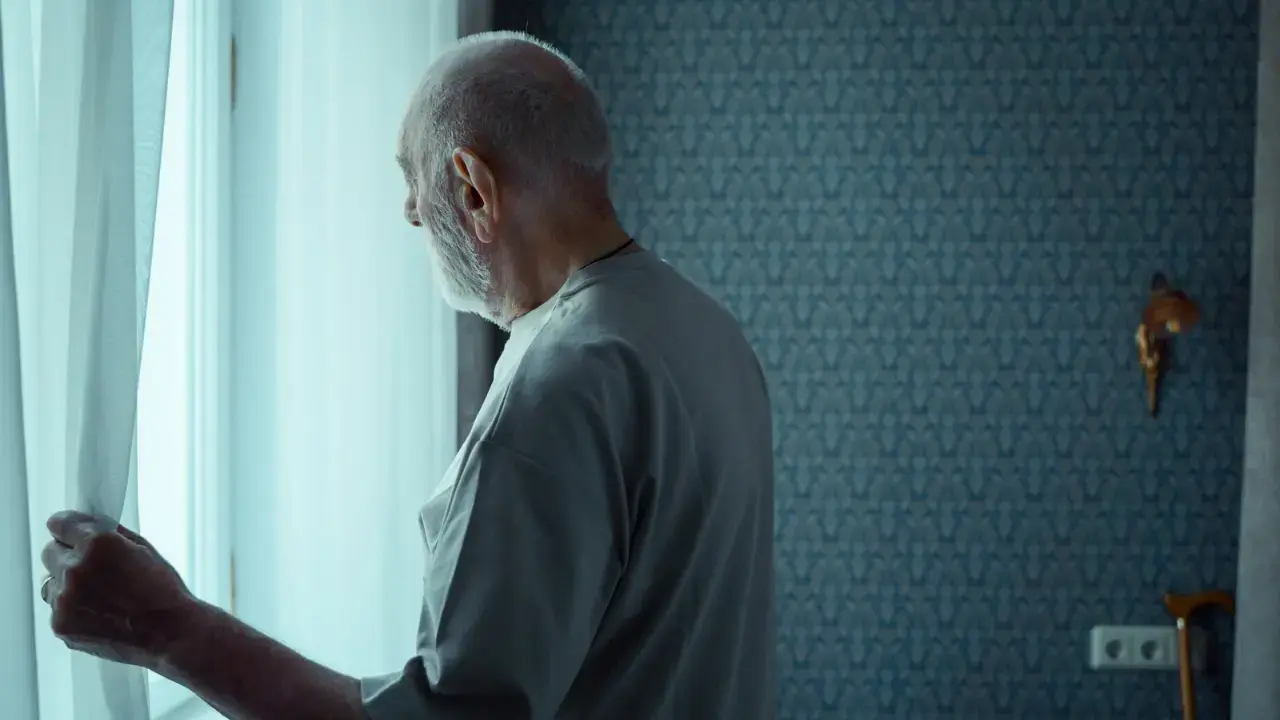
This is a different kind of loneliness. Not the loneliness of being physically alone, but the loneliness of not feeling emotionally seen.
Families Living in Invisible Cubicles
One of the saddest realities of modern life can be seen inside our own homes.
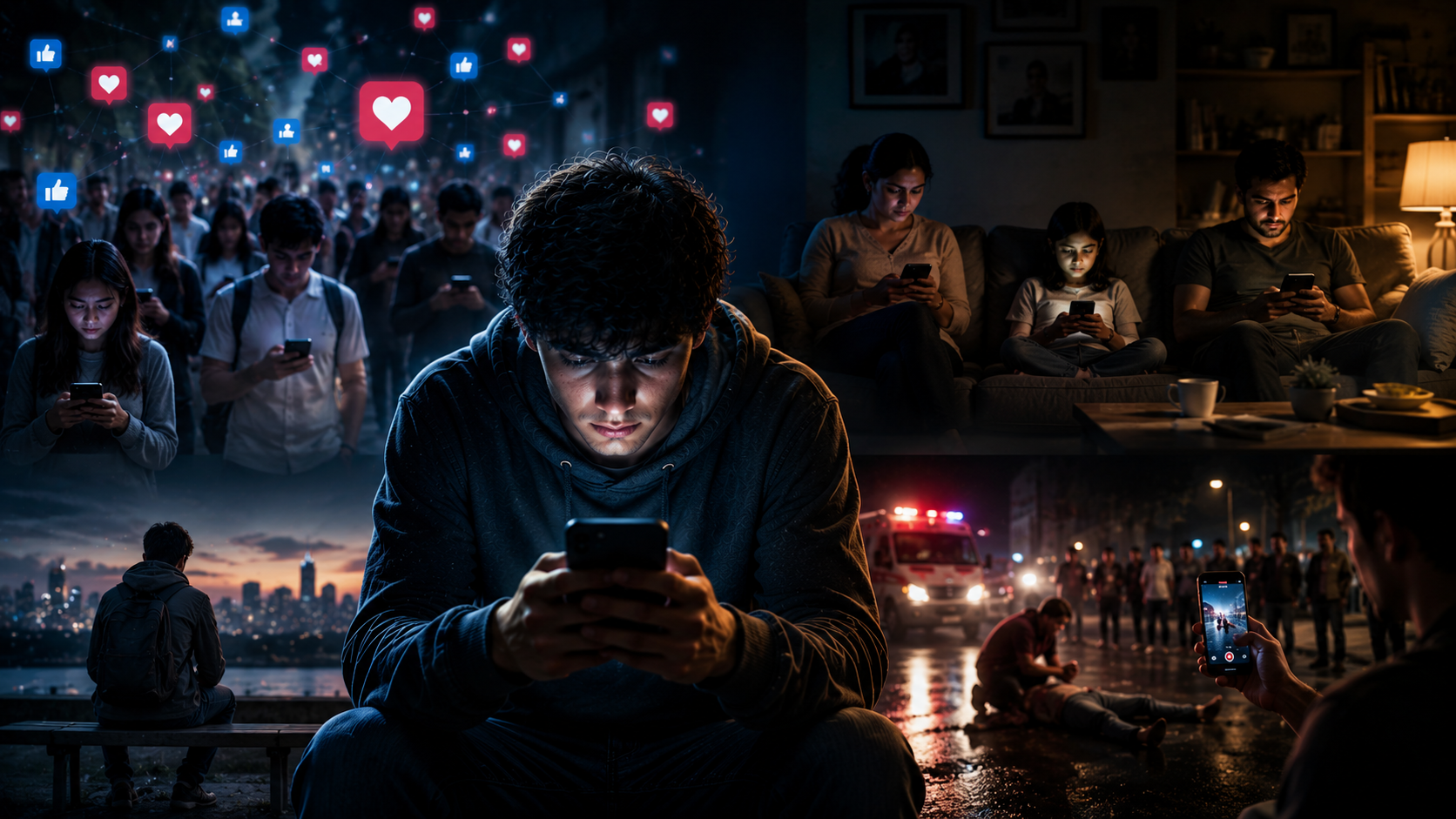
Three family members may sit on the same couch for hours, yet all three are living in completely separate digital worlds. One is scrolling Instagram. Another is watching reels. Someone else is replying to messages. The room is silent. Not because there is peace,
but because conversation has slowly disappeared.
People are physically present, but mentally absent. We are no longer living together emotionally. We are living in invisible cubicles created by screens.
Scrolling Has Replaced Feeling
Earlier, silence encouraged reflection. Now, silence feels uncomfortable. The moment we feel bored, anxious, lonely, or emotionally unsettled, we instantly reach for our phones.
Scrolling has become an escape from ourselves. But the more we escape emotionally,
the more disconnected we become from our inner world. Many people today do not even realize they are lonely because they are constantly distracted. Noise has replaced connection. Content has replaced conversation.
The Loss of Human Sensitivity
Perhaps the most disturbing impact of modern loneliness is the gradual loss of emotional sensitivity. Today, when accidents happen or someone breaks down in public, many people’s first instinct is not to help. It is to record. We see human suffering becoming social media content.
A person crying becomes a viral reel. An accident becomes “breaking footage.” Pain becomes entertainment. Somewhere, constant exposure to screens and content has desensitized us. We are watching more human emotions than ever before,
yet feeling less and that is deeply alarming.
Why Are We Becoming Emotionally Numb?
Because the digital world moves too fast for emotional depth – everything is instant.
Instant replies.
Instant dopamine.
Instant validation.
But real human relationships are slow.
Healing is slow.
Trust is slow.
Emotional intimacy takes time.
Modern life rewards attention, not presence. And slowly, many people are forgetting how to truly be present with another human being.
The Illusion of Constant Connection
Technology creates the illusion that we are never alone. But being constantly online is not the same as being emotionally connected. A person can receive hundreds of likes and still cry alone at night.
Someone can post smiling pictures every day and still feel deeply empty inside. Because human beings do not only need visibility. They need understanding. They need warmth.
Presence, safety and real conversation.
Technology itself is not the enemy
The solution is not to reject technology completely. Technology itself is not the enemy. The real challenge is learning how to stay human in a digital world. Maybe healing begins with small things:
Putting the phone away during dinner.
Calling a friend instead of just reacting to their story.
Listening fully when someone speaks.
Sitting with family without screens.
Helping someone before filming them.
And perhaps most importantly- learning to reconnect with ourselves. Because sometimes the loudest loneliness exists inside people who are surrounded by constant digital noise.
Human Beings Heal Through Connection
Modern loneliness is not simply about being alone. It is about feeling unseen in a world that constantly watches you. It is about having endless communication, but very little connection.
We built a world where WiFi signals are stronger than emotional bonds. And maybe that is why, despite having everything at our fingertips, so many people still feel empty inside. Perhaps the future of mental wellness is not just faster technology. Perhaps it is learning how to be emotionally present again. Because at the end of the day, human beings do not heal through notifications.
They heal through connection.