Our Kids Are Not Okay: A Call to Save Our Children, and Our Future.
- |
- 09 Sep 2026
- |
- Connected minds

This Suicide Prevention Month, perhaps the most important conversation we need to have is not about suicide alone. It is about the children we are raising, the world they are growing up in, and the pain we may be failing to notice.
September 10, the world observes World Suicide Prevention Day, a day dedicated to raising awareness that suicide is preventable and encouraging conversations that can save lives. The theme for 2024–2026 is “Changing the Narrative on Suicide,” with a simple but powerful call to action – Start the Conversation.
But if we truly want to change the narrative, perhaps the conversation needs to begin much earlier, long before a child reaches a crisis. Because our children are not okay.
Every day, we hear stories about children spending hours on phones and gaming platforms, teenagers withdrawing from their families, parents struggling to communicate with their children, young people dealing with bullying, body shaming, academic pressure, rejection and loneliness. And increasingly, we hear heartbreaking stories of children hurting themselves or thinking about ending their lives.
Our immediate reaction is often to identify the culprit.
The phone. Social media. Gaming. Peer pressure. Drugs.
But perhaps we are looking at the problem from the wrong end.
Recently, while recording a podcast with psychologist and parenting coach Karishma Mehra, she offered a perspective that stayed with me.
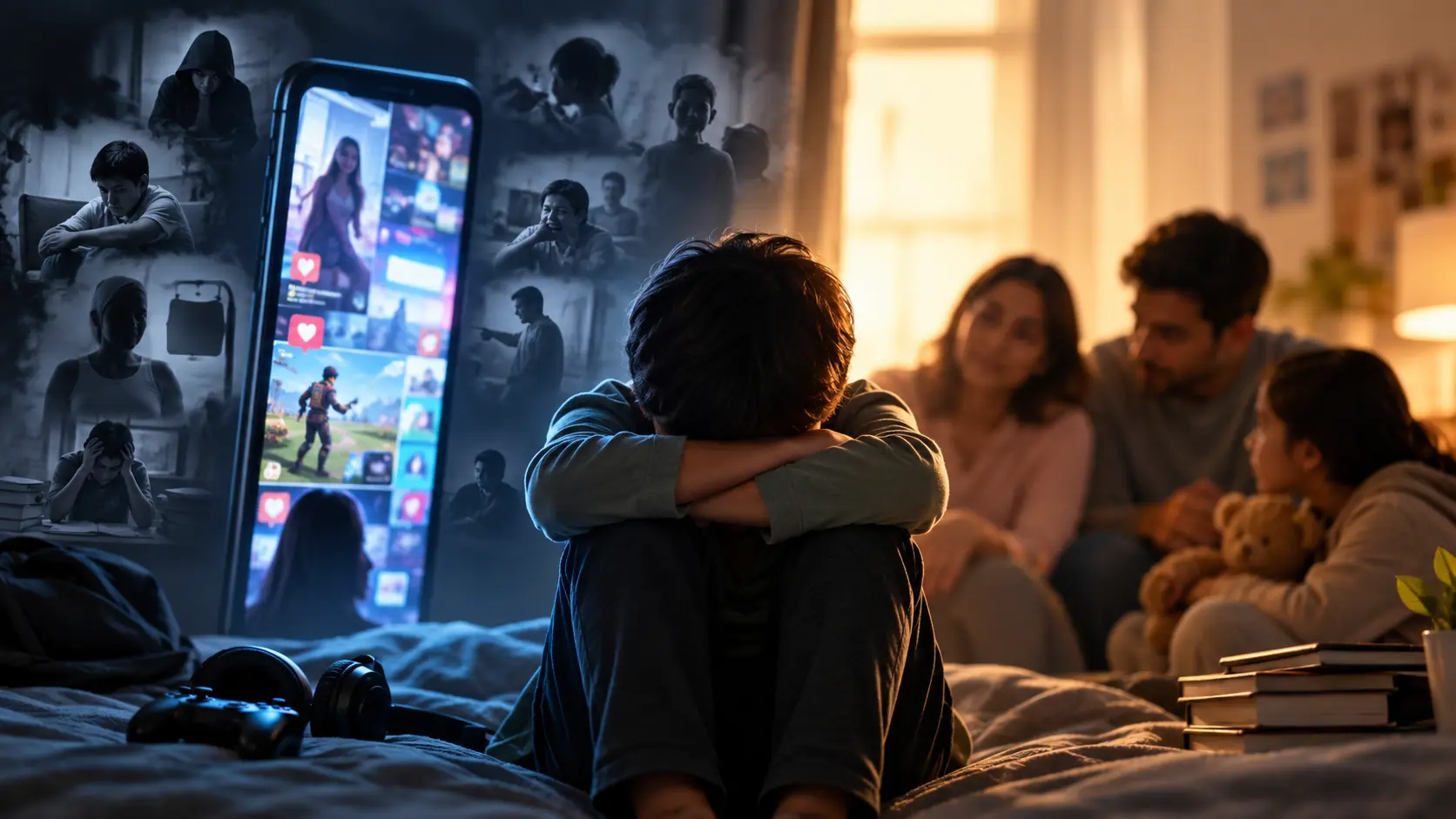
She compared the way adults sometimes use painkillers to manage physical pain with the way children may use their phones to escape emotional pain. A painkiller may temporarily reduce the sensation of pain, but it doesn’t necessarily resolve the underlying health problem. In a similar way, she explained, the phone can become a kind of emotional painkiller for a child, not because the child is consciously trying to avoid reality, but because the digital world can temporarily give them relief from what they are feeling.
The phone may not be taking away the pain. It may simply be helping them not feel it for a while.
It is the phone. It is social media. It is gaming. It is peer pressure. It is drugs. It is this generation.
The phone may be the place where the child is escaping to. Social media may be the space where they are searching for validation. Gaming may be the world where they finally feel competent, accepted or in control. These things can certainly become harmful and addictive, but what if, underneath the behaviour, there is a child struggling with something much deeper?
What if the real crisis is not simply screen addiction, but emotional disconnection?
A child can be surrounded by people and still feel profoundly lonely. A teenager can sit at the family dinner table every night and still believe that nobody understands them. A child can have food, clothes, education, a comfortable home and everything that appears necessary for a good life and still be struggling internally. And this is where we, as parents and as a society, need to pause.
Human beings have an incredibly strong instinct to survive. When a small child gets hurt, they cry. When we experience physical danger, our body instinctively tries to protect us. Survival is not something we usually have to teach a child.
So when a young child becomes so overwhelmed by emotional pain that death begins to appear to them as an escape, the question cannot simply be, “What is wrong with this child?”
The question has to be:
“What has happened to this child?”
What pain have they been carrying?
What loneliness have they been living with?
What rejection have they experienced?
What humiliation have they internalised?
What pressure have they been unable to express?
What made them believe that they had nowhere to turn?
We need to be extremely careful here. Suicidal thoughts and behaviour are complex and cannot be explained by one cause, whether that is social media, parenting, trauma, bullying, or any other single factor. But the very fact that children can become so overwhelmed should make us examine the emotional environment we are creating around them.
Because somewhere along the way, we may have become very good at monitoring children and not quite as good at understanding them.
We monitor their screen time.
We monitor their marks.
We monitor what they eat.
We monitor their behaviour.
We monitor whether they are performing well enough.
But are we monitoring how they feel?
Are we asking what they are afraid of?
What makes them feel inadequate?
Who they compare themselves with?
Whether they feel lonely?
Whether they are being bullied?
Whether they hate the way they look?
Whether they feel they can fail without disappointing everyone around them?
The world our children inhabit today is relentlessly comparative. Their phones bring an endless stream of carefully edited lives into their bedrooms. Someone is always prettier, fitter, richer, more successful, more popular or seemingly happier. A child can begin comparing their ordinary life with someone else’s carefully curated highlight reel and slowly come to the conclusion that they are the problem.
Then there is body shaming. A casual comment about weight. A joke about appearance. A comparison with a sibling or cousin. A remark about skin, height, hair or clothes.
Adults may forget those words five minutes later. A child may carry them for years. And when children don’t have the emotional vocabulary to say, “That comment hurt me,” the pain may come out differently – in withdrawal, anger, eating problems, excessive social-media use, aggression, anxiety or silence.
This is why simply taking the phone away cannot always be the solution. Sometimes we need to ask what the phone is doing for the child. What are they finding there that they aren’t finding in the real world?
Connection?
Recognition?
Belonging?
Escape?
Control?
Validation?
A sense of achievement?
If we remove the phone without understanding the need underneath it, we may remove the coping mechanism without addressing the pain. This does not mean parents should ignore excessive screen use or harmful online behaviour. Boundaries matter. Digital safety matters. Supervision matters. But boundaries work best when they exist alongside connection.
A child needs to know that home is not simply where rules are enforced. It should also be where difficult truths can be spoken.
A child should be able to say, “I’m struggling,” without immediately hearing, “Everyone struggles.”
They should be able to say, “I hate myself,” without being told, “Don’t talk nonsense.”
They should be able to say, “I’m scared,” without being made to feel weak.
And most importantly, they should know that if they ever reach a point where life feels unbearable, asking for help will not make them a disappointment.
This is where suicide prevention becomes more than a once-a-year campaign.
It becomes parenting.
It becomes education.
It becomes community.
It becomes mental-health awareness.
It becomes creating homes and schools where children can talk about difficult emotions before those emotions become a crisis.
World Suicide Prevention Day is asking us to change the narrative to move away from silence, stigma and misunderstanding and towards openness, empathy and support.
For parents, that change can begin with something remarkably simple.
Instead of asking only, “How much time did you spend on your phone today?”
Ask: “How were you feeling today?”
Instead of asking only, “Why are your marks falling?”
Ask: “Is something making it difficult for you to concentrate?”
Instead of saying, “Why are you always in your room?”
Ask: “Is there something happening that you don’t know how to talk about?”
And sometimes, don’t ask anything at all. Just sit beside them because connection doesn’t always require a conversation. Sometimes it requires presence. And if a child shows signs of serious emotional distress, talks about self-harm or suicide, or you are concerned about their immediate safety, take it seriously and seek professional help. Suicide prevention is not something a family has to navigate alone.
We cannot create a world where our children never experience pain. But we can create a world where they don’t have to experience that pain in silence. Perhaps that is the responsibility this Suicide Prevention Day places before all of us. Not simply to save children when they are at the edge. But to build a society that notices them long before they get there.
We cannot keep asking, “What’s wrong with our kids?”
We need to start asking: “What’s happening to our kids?”
Because these are not just our children. They are our future. And if we want to save our future, we have to start by saving the emotional lives of the children growing up today.
Suicide Prevention Day is not just another date on the calendar. It is a reminder. A reminder to look up from our phones. To look beyond the behaviour. To listen beyond the words. To notice the silence. To start the conversation.
Because sometimes, a conversation started at the right time can become the bridge between pain and help, between isolation and connection, between losing hope and finding it again.
Our kids are not okay.
It is time we stopped looking away.