
Workplace Wellbeing: Understanding the Stress We Often Overlook.
- |
- 27 Nov 2026
- |
- Anxiety & Stress

It is often said that if you love your work, it won’t seem like work anymore. But the moment you add deadlines, deliverables, quality, guidelines, dates, etc., it becomes a task that gets added to your mental to-do list. This creates pressure and takes away the sense of free will.
If we dismantle this concept, seeking help from professionals such as therapists, social workers, doctors, and everyone else who happens to enjoy the work they do becomes easier automatically.
You can love the work you do and still feel drained by the end of the day. You can find your work meaningful and yet feel, “I don’t want to do this again tomorrow.” Enjoying what you do does not mean you have to enjoy every demand that comes with it.
Understanding the Subtle Sources of Workplace Stress
Often, workplace stress is associated with overwhelming stressors and changes that are easily observable. This, in turn, makes us overlook the day-to-day subtle indicators that eventually lead to burnout, decreased productivity, and a decline in mental wellbeing.
For some employees, decreased productivity could be attributed to the fact that the weather has changed and travelling by bike has become difficult. Work is now associated with the uneasy feeling of having to overcome a challenge even before reaching the workplace.
For some, it could be the expenditure on food that they have to worry about when coming to the office. For others, it could be a lack of skills that makes them feel incompetent within a team. They may feel too scared to express their concerns, ask questions, or learn, so they learn to avoid the situation altogether.
At times, constant feedback that is not paired with enough appreciation makes employees walk on eggshells. This shows up as a lack of confidence in their work, which, in reality, could be the fear of making mistakes and not getting things right in one go.
In such situations, a balance of structure along with some level of autonomy helps in regaining confidence at a company level.
How Small Tasks Pile Up and Lead to Overwhelm
As a result, employees sometimes start avoiding work altogether until it reaches a point where tasks pile up and become too much. This can manifest as cognitive fog due to stress.
How I perceive it is like a huge mountain made up of time beads, where the beads represent all the small, everyday tasks that we procrastinate on.
Individually, these tasks are not very big. But when they all come together and start piling up, they begin to look like a mountain that cannot be approached.
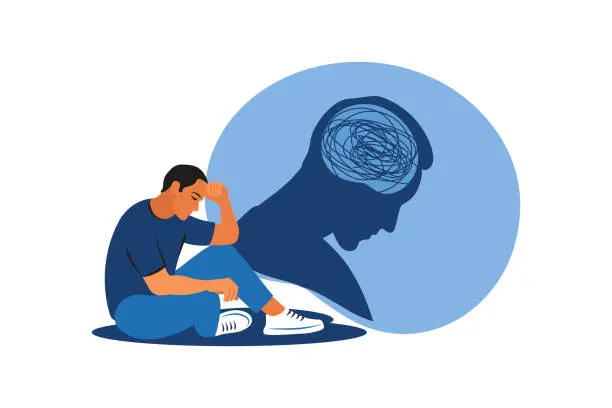
We start to feel overwhelmed, experience cognitive fog, face challenges in completing any task at hand, and develop a feeling of being stuck. We are not moving ahead or doing anything, yet we continue to feel the weight of everything.
Understanding the Root Cause of Overwhelm
At such times, instead of immediately labelling ourselves as unproductive, it helps to pause and understand what is contributing to the overwhelm.
It is important to understand where this might be coming from so that we can actually work on the root cause instead of just trying to eradicate the symptoms.
Figure out where this overwhelm is coming from. Is it because the task is not engaging enough? Are your efforts not being appreciated enough to a point where doing anything seems pointless? Does the task feel too challenging to even attempt because the fear of failure is too high? Or have you simply had a rough week?
At such times, when you are holding too much information cognitively and are unable to move forward, try jotting everything down randomly on a blank sheet of paper.
Pick the least effortful thing that you can do right now. Once you complete it, give yourself a little reward. Then pick the next non-threatening task and continue prioritising.
Other than that, try venting to a friend, or if the issue persists, consider talking to a therapist.
Workplace Wellbeing: A Shared Responsibility
Workplace wellbeing is a holistic concept and not an individual responsibility. Working at various levels of intervention becomes important: organisational, leadership, and employee levels.
1. Organisational Level
At the organisational level, even small changes, like a morning fun routine, can help streamline everyone’s state of mind and bring their attention and focus back to the environment and culture of work.
This might help employees channelise their focus back towards work and disconnect from the stressors they may have been carrying to work unintentionally and unknowingly.
Creating spaces where people can be imperfect and normalising mistakes, instead of attaching them to individual identities, can make a difference. Treating mistakes as opportunities to upskill rather than labelling someone as incompetent can help employees feel at ease.
This can also help them avoid functioning under a constant supply of cortisol, remaining on high alert, and experiencing the underlying anxiety of “what if”.
2. Leadership Level
Leadership positions can balance feedback with appreciation.
They can also create mechanisms to check in on other significant factors contributing to productivity, such as employees’ mental wellbeing, work culture, structural factors, communication patterns, working styles, and learning styles, as these can vary for every employee.
It is important to identify changes in employee behaviour and respond with curiosity rather than immediate judgement.
3. Employee Level
For employees, it is also often said that if your 9 to 5 isn’t enriching enough, work hard to make your 5 to 9 fun enough to repair and recover from the hustle and to keep substance in your life.
Figure out where your energy is going at the end of the day. Just like your phone battery, introspect about the situations, people, or thoughts that are taking up most of your energy.
A healthy workplace is not one where people never feel stressed. It is one where they don’t have to ignore their stress to continue belonging there.








Comments 0
No comments yet.
Be the first to share your thoughts on this post!